

Domestic: (800) 748-3349 – International: (203) 743-3349
Key Takeaways
- Mode-locked laser systems generate ultra-short light pulses with femtosecond or picosecond durations, enabling precision across applications like microscopy, optical communication, and material processing.
- These systems utilize active, passive, or hybrid mode-locking techniques to synchronize light modes and achieve stable, high-intensity pulse trains.
- Key components, such as gain mediums, optical cavities, and saturable absorbers, are crucial for maintaining laser stability, pulse consistency, and high performance.
- Mode-locked lasers have revolutionized scientific research, industrial processes, and medical technologies by enhancing imaging resolution, improving micromachining accuracy, and enabling non-invasive treatments.
- Challenges like material limitations, environmental sensitivity, and complex designs persist but can be addressed through advancements in system performance, customization, and innovative materials.
- Future developments aim to deliver shorter pulse durations, higher modulation speeds, and tailored solutions for emerging applications, further broadening their impact across industries.
Mode-locked laser systems have revolutionized the way we approach precision and control in optical applications. These systems generate ultra-short pulses of light, making them indispensable for advanced technologies like microscopy, optical communication, and material processing. But what makes these lasers so impactful, and how do they achieve such remarkable accuracy?
At their core, mode-locked lasers rely on synchronization to produce pulses with incredible stability and repetition rates. This precision opens doors to applications demanding high-speed modulation and fine-tuned light control. Whether you’re exploring cutting-edge research or developing innovative tools, these systems offer a reliable foundation for achieving exceptional results.
Have you ever wondered how such precise light pulses are used to push the boundaries of science and technology? By diving deeper into the mechanics and applications of mode-locked lasers, we can uncover how they’re shaping industries and driving advancements in optical innovation. Let’s explore their potential together.
Unlock Precision Pulse Control with Conoptics
If you’re working with mode-locked laser systems, Conoptics offers high-performance electro-optic modulators, drivers, and optical isolators to support ultra-short pulse generation with exceptional accuracy. Our components are engineered for stability, speed, and seamless integration into advanced scientific and industrial applications. Contact us today to learn how Conoptics can help optimize your mode-locking setup for peak performance.
Overview Of Mode-Locked Laser Systems
Mode-locked laser systems generate ultra-short light pulses by synchronizing different modes of light within the laser cavity. This synchronization forms a consistent train of pulses with durations typically in the femtosecond or picosecond range. These compact, high-energy pulses make them indispensable in various advanced optical applications.
Pulse generation relies on the precise balance between gain and loss mechanisms in the laser medium. Active or passive mode-locking techniques fine-tune this balance. Passive techniques often use saturable absorbers, while active techniques depend on external modulation systems. Each method offers distinct advantages based on the intended application.
Mode-locked lasers excel in scientific research and industrial processes. For example, their precision benefits techniques like multi-photon microscopy, where ultra-short pulses enhance imaging resolution. Additionally, they contribute to material processing by enabling micromachining tasks that require fine detail.
High-speed modulation and pulse selection improve the efficiency of these systems. We’ve developed modulators and drivers for pulse selection, allowing better control over energy distribution in applications like optical communication or signal processing. Understanding these features helps in identifying how these lasers optimize performance across multiple sectors.
Have you ever considered the role of light stability in laser systems? For mode-locked lasers, stability matters as it directly influences output quality. Features like laser amplitude stabilization and optical isolators work to minimize noise. These components protect against feedback disturbances, ensuring smoother operation over extended durations.
Mode-locked systems continue advancing, pushing boundaries in imaging, data transmission, and precision machining. Emphasizing functionality and adaptability, they remain pivotal in technologies benefiting from rapid pulse dynamics and accurate light manipulation.
Principles Of Mode-Locking
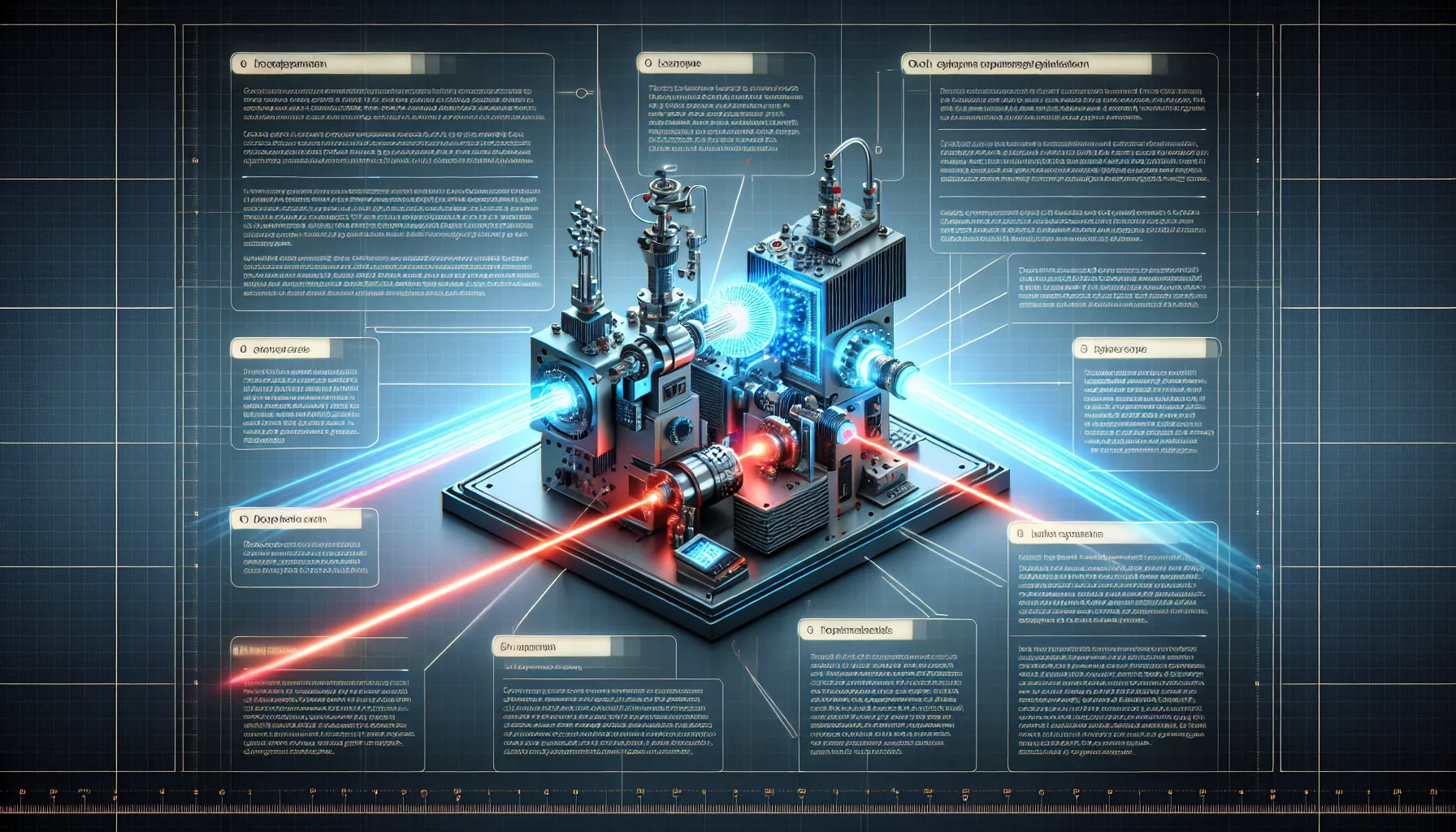
Mode-locking generates precise, ultra-short light pulses by synchronizing light waves within a laser cavity. This process creates stable, high-intensity pulse trains suited for advanced optical applications.
Passive Mode-Locking
Passive mode-locking relies on saturable absorbers to enable pulse formation. Saturable absorbers decrease their absorption at higher light intensities, promoting pulse amplification while suppressing continuous wave operation. This technique is self-regulating, triggering ultra-short pulses without requiring external intervention. For instance, it supports femtosecond pulse generation in scientific imaging systems.
Active Mode-Locking
Active mode-locking involves external modulation to control laser pulses. Modulators inside the laser cavity adjust the phase or intensity of light, synchronizing individual light modes. This method achieves consistent pulse spacing and is ideal for applications requiring adjustable repetition rates. Optical communication systems often employ active locking to achieve signal precision and efficiency.
Hybrid Mode-Locking
Hybrid mode-locking combines passive and active techniques for enhanced control. Saturable absorbers work with external modulators to stabilize pulses and maintain flexible repetition. This approach produces highly consistent pulse durations, making it valuable in precision manufacturing or high-resolution microscopy. Hybrid systems balance autonomous operation with modulator-driven refinement.
Key Components Of Mode-Locked Lasers
Mode-locked lasers rely on specific components to generate precise, ultra-short pulses of light. Each plays a critical role in maintaining stability, improving performance, and supporting diverse applications. What makes these components integral to laser systems? Let’s explore their functions.
Gain Medium
The gain medium amplifies light within the laser cavity. It determines the laser’s wavelength range and pulse energy. Common materials include doped crystals, glasses, and semiconductors. For instance, titanium-doped sapphire is frequently used for broad bandwidth applications due to its wide gain spectrum. The choice of medium impacts efficiency and suitability for specific tasks, such as high-resolution microscopy or material processing. Are the materials compatible with intended outcomes, and do they meet energy requirements?
Optical Cavity
The optical cavity houses the gain medium and mirrors to guide light through repeated amplification. It establishes the spatial and temporal properties of light pulses. Typically, two mirrors—the highly reflective and partially transmissive—allow controlled light emission. In pulse generation, the cavity length directly affects repetition rates. Incorporating precise cavity alignment prevents mode mismatches and optimizes pulse synchronization. What adjustments would enhance the interaction between cavity length and desired pulse specifications?
Saturable Absorbers
Saturable absorbers regulate pulse formation by suppressing low-intensity light and amplifying high-intensity pulses. Passive mode-locking relies on these materials, which can be dyes, semiconductors, or even carbon-based structures like graphene. They self-modulate light intensity to maintain femtosecond or picosecond pulse durations. Saturable absorbers are vital for achieving consistent pulses in communication systems and imaging technologies. Could advancements in absorber materials improve flexibility for emerging applications?
Applications Of Mode-Locked Laser Systems
Mode-locked laser systems provide essential solutions across diverse fields due to their ability to generate ultra-short, highly precise light pulses. Their contributions span scientific research, industrial innovations, and medical advancements, impacting technologies with precision and effectiveness.
Scientific Research
Mode-locked lasers play a critical role in advancing scientific tools and methodologies. Researchers benefit significantly from the ultra-short pulse durations of these lasers, enabling high-resolution imaging and detailed time-resolved spectroscopy. In multi-photon microscopy, the lasers enhance spatial resolution by exciting fluorophores at precise depths, facilitating clearer imaging of biological tissues.
In optical tweezers, mode-locked systems generate the controlled light beams required to manipulate microscopic particles. This allows scientists to study cellular behavior without inflicting damage. By precisely modulating light intensity and wavelength, mode-locked lasers also support quantum experiments, helping to unravel interactions at the atomic and subatomic levels. How could these capabilities further transform basic scientific research?
Industrial Applications
In industrial processes, mode-locked lasers optimize precision tasks and improve process efficiency. In micromachining, their ultra-short pulse durations minimize thermal damage, enabling accurate material cuts and patterns on micro scales. For industries requiring high-speed operations, mode-locked systems offer fast, stable beams ideal for laser engraving and etching.
Through video-disc mastering, these lasers contribute to high-quality content reproduction, using pulse trains for encoding fine patterns. They additionally support semiconductor fabrication by regulating energy distribution during lithographic etching. How might the increasing demand for precision manufacturing influence the adoption of these systems?
Medical Uses
Mode-locked lasers have become indispensable in medical imaging and therapeutic applications. In ophthalmology, these systems provide the precision needed for corneal surgeries, improving outcomes while reducing recovery times. Their ability to generate femtosecond pulses makes them essential in guiding non-invasive imaging systems, such as optical coherence tomography (OCT), offering detailed visualization of internal tissue structures.
They are also instrumental in photodynamic therapy, where precisely modulated light activates photosensitizing agents to target diseased tissues without damaging surrounding areas. With advancements in biomedical lasers, could even more non-invasive treatments emerge in the future?
Advantages And Challenges
Mode-locked laser systems offer significant benefits but also present technical challenges. Understanding these aspects helps in maximizing their potential applications.
Benefits Of Mode-Locked Systems
Mode-locked lasers deliver ultra-short, precise light pulses that power a variety of advanced technologies. These pulses achieve durations in femtoseconds or picoseconds, making them invaluable for applications demanding precision, like high-resolution imaging or delicate micromachining. Their ability to produce consistent and rapid pulses enables breakthroughs in scientific research, such as multi-photon microscopy and time-resolved spectroscopy.
These systems enhance efficiency in optical communication by facilitating high-speed data transmission. Ultra-short pulses reduce interference, improving signal clarity across long distances. In medical fields, their precision supports non-invasive imaging methods, like optical coherence tomography, providing exceptionally detailed results.
Customizable pulse repetition rates and high energy outputs make these lasers adaptable. They’re beneficial in tasks that require flexible operational settings, including industrial processes and research environments. For example, they improve microfabrication precision by focusing energy accurately on targeted areas.
Limitations And Technical Challenges
While advantageous, mode-locked systems involve intricate designs that can be technically demanding. Active mode-locking requires precise external modulation for proper functioning. Incorrect synchronization can disrupt pulse consistency, reducing the system’s performance in sensitive applications.
Passive systems use components like saturable absorbers, which rely heavily on material properties. Deviation in these properties can lead to instability, affecting uniform pulse generation. Hybrid systems, although flexible, demand higher control and maintenance due to their combined mechanisms.
Environmental factors, like temperature fluctuations and external vibrations, impact performance. Laser stability relies on steady operating conditions, which may necessitate advanced thermal management or vibration isolation setups. For wavelengths extending into the deep UV range, specialized materials are needed, increasing production complexity.
What improvements would make these technologies even more accessible? By addressing these challenges, advancements in design and component materials can further enhance their applications.
Future Developments In Mode-Locked Laser Systems
Advancements in mode-locked laser systems are focusing on refining performance across different applications. Researchers aim to create systems capable of generating even shorter pulse durations, striving to reach sub-femtosecond ranges. This precision could revolutionize applications like attosecond science, helping to explore ultrafast phenomena with greater accuracy.
High-speed modulation technologies are being developed to enhance control over laser pulses. These systems can deliver higher modulation bandwidths, essential for efficient optical communication and advanced imaging. For example, integrating next-generation electro-optic modulators that operate at speeds up to 800 MHz can improve signal processing and energy distribution.
Customization is another area gaining significant attention. Tailored laser solutions are being engineered to meet the unique requirements of emerging medical, industrial, and research needs. Systems designed for specific wavelengths, such as deep UV or near-infrared, promise better compatibility with advanced imaging techniques and micromachining processes.
New materials are being explored to improve gain mediums and saturable absorbers. Such innovations could enhance the stability of mode-locked lasers against environmental influences like temperature shifts and vibrations, resulting in more consistent performance across diverse settings.
What future advancements would most benefit your work? Integrating user-specific feedback drives innovation, enabling the development of systems that address the practical challenges users face every day.
Conclusion
Mode-locked laser systems represent a cornerstone of modern optical technology, driving advancements across scientific, industrial, and medical fields. Their ability to produce ultra-short, precise light pulses has unlocked new possibilities in imaging, communication, and material processing, reshaping how we approach complex challenges.
As innovations continue to refine their performance, these lasers are poised to deliver even greater precision and efficiency. With ongoing research into shorter pulse durations, advanced materials, and high-speed modulation, the potential applications of mode-locked systems are expanding rapidly.
By addressing technical challenges and tailoring designs to meet specific needs, we can harness the full power of mode-locked lasers to push the boundaries of what’s achievable in both established and emerging technologies.
Frequently Asked Questions
What is a mode-locked laser system?
A mode-locked laser system is a specialized laser that generates ultra-short light pulses, typically in the femtosecond or picosecond range, by synchronizing different light modes within the laser cavity. These systems are widely used in applications requiring high precision and rapid pulse generation, including optical communication, microscopy, and material processing.
How do mode-locked lasers generate ultra-short pulses?
Mode-locked lasers produce short pulses by achieving synchronization between light waves within the laser cavity. This is accomplished through techniques like passive mode-locking, which uses saturable absorbers, or active mode-locking, which relies on external modulation.
What are the main components of mode-locked laser systems?
Key components include the gain medium (amplifies light and determines wavelength), the optical cavity (guides light and controls pulse repetition rates), and saturable absorbers (regulate pulse formation by amplifying high-intensity light while suppressing low-intensity light).
What are the primary applications of mode-locked lasers?
Mode-locked lasers are used in scientific research, industrial processes, and medicine. Applications include multi-photon microscopy, micromachining, optical communication, corneal surgeries, optical coherence tomography (OCT), and photodynamic therapy.
What is the difference between active and passive mode-locking?
Active mode-locking uses external modulation to control pulse timing, ideal for adjustable repetition rates. Passive mode-locking employs saturable absorbers to self-regulate pulse amplification, enabling the generation of ultra-short, stable pulses.
What are the advantages of mode-locked laser systems?
Mode-locked lasers provide precise, ultra-short light pulses that enhance optical communication, high-resolution imaging, and precision machining. They also support advanced technologies like spectroscopy, laser engraving, and medical imaging.
What challenges do mode-locked laser technologies face?
Challenges include reliance on material properties for stability, sensitivity to environmental factors like temperature or vibrations, and the technical complexity of achieving precise modulation and synchronization.
How are mode-locked lasers used in optical communication?
Mode-locked lasers transmit data using ultra-short light pulses, enabling high-speed data transfer with high precision and minimal signal distortion, making them essential for modern communication networks.
How are researchers improving mode-locked laser systems?
Innovations aim to create sub-femtosecond pulse durations, enhance high-speed modulation, and develop tailored systems for specific applications. New materials are being explored to improve stability and performance under environmental changes.
Why are saturable absorbers important in mode-locking?
Saturable absorbers regulate pulse formation by amplifying high-intensity light while suppressing low-intensity light. This ensures consistent and stable pulse generation, making them crucial for most passive mode-locking systems.