
Domestic: (800) 748-3349 – International: (203) 743-3349
Key Takeaways
- Optical pulse compressors are essential devices that shorten laser pulse durations without reducing energy, enabling higher intensity and precision for scientific and industrial applications.
- Key components include diffraction gratings, prisms, mirrors, drive electronics, and fiber optics, each contributing to dispersion management and pulse quality.
- There are several types of pulse compressors—grating-based, prism-based, and chirped mirror designs—each offering unique advantages for different bandwidth and application requirements.
- Compressed laser pulses drive advancements in ultrafast microscopy, telecommunications, micromachining, particle manipulation, spectroscopy, and quantum research.
- While these devices improve performance and enable breakthroughs, they may introduce system complexity, require precise alignment, and have varying levels of tunability and maintenance needs.
Controlling the shape and duration of laser pulses is essential for many scientific and industrial applications. Optical pulse compressors help us shorten laser pulses, making them more powerful and precise. By fine-tuning these pulses, we can achieve better results in fields like microscopy, telecommunications, and advanced manufacturing.
Have you ever wondered how researchers manage to produce such sharp, controlled bursts of light? Optical pulse compressors play a key role in this process, adjusting the timing and intensity of laser pulses to suit specific needs. Whether you’re working in a lab or exploring new laser technologies, understanding these devices can help you achieve greater accuracy and efficiency.
Achieve Precision with Conoptics Optical Pulse Compressors
When your work depends on ultrafast accuracy, pulse control is everything. At Conoptics, we design and deliver advanced optical components—including pulse compressors, electro-optic modulators, and isolators—that help researchers and engineers achieve shorter, cleaner pulses without sacrificing energy. From telecommunications to biomedical imaging and quantum research, our solutions empower innovation at the speed of light.
Ready to elevate your laser systems? Contact us today and explore how our technology can optimize performance for your specific applications.
What Is an Optical Pulse Compressor?
An optical pulse compressor shortens the duration of laser pulses without reducing their energy. This device uses pairs of optical elements like diffraction gratings or prisms. These elements introduce negative dispersion, which means they offset the delay caused by materials or previous devices that stretched the pulse. By realigning the different parts of the pulse in time, the compressor creates a much shorter, stronger burst of light.
Many research labs and production facilities depend on pulse compressors for applications requiring high-intensity, ultrashort pulses. In ultrafast science, for example, these tools help scientists investigate chemical reactions on incredibly short timescales. Manufacturers use them to increase the precision of micromachining. Industries including telecommunications, biomedical imaging, and quantum electronics frequently incorporate pulse compressors into their systems.
Have you ever wondered how scientists achieve laser pulses short enough to capture events at the femtosecond level? Pulse compressors answer this challenge by reshaping stretched pulses to their original, shorter form, making previously impossible levels of measurement and control feasible. What types of experiments or technologies could benefit from even shorter, more powerful laser pulses?
How Optical Pulse Compressors Work
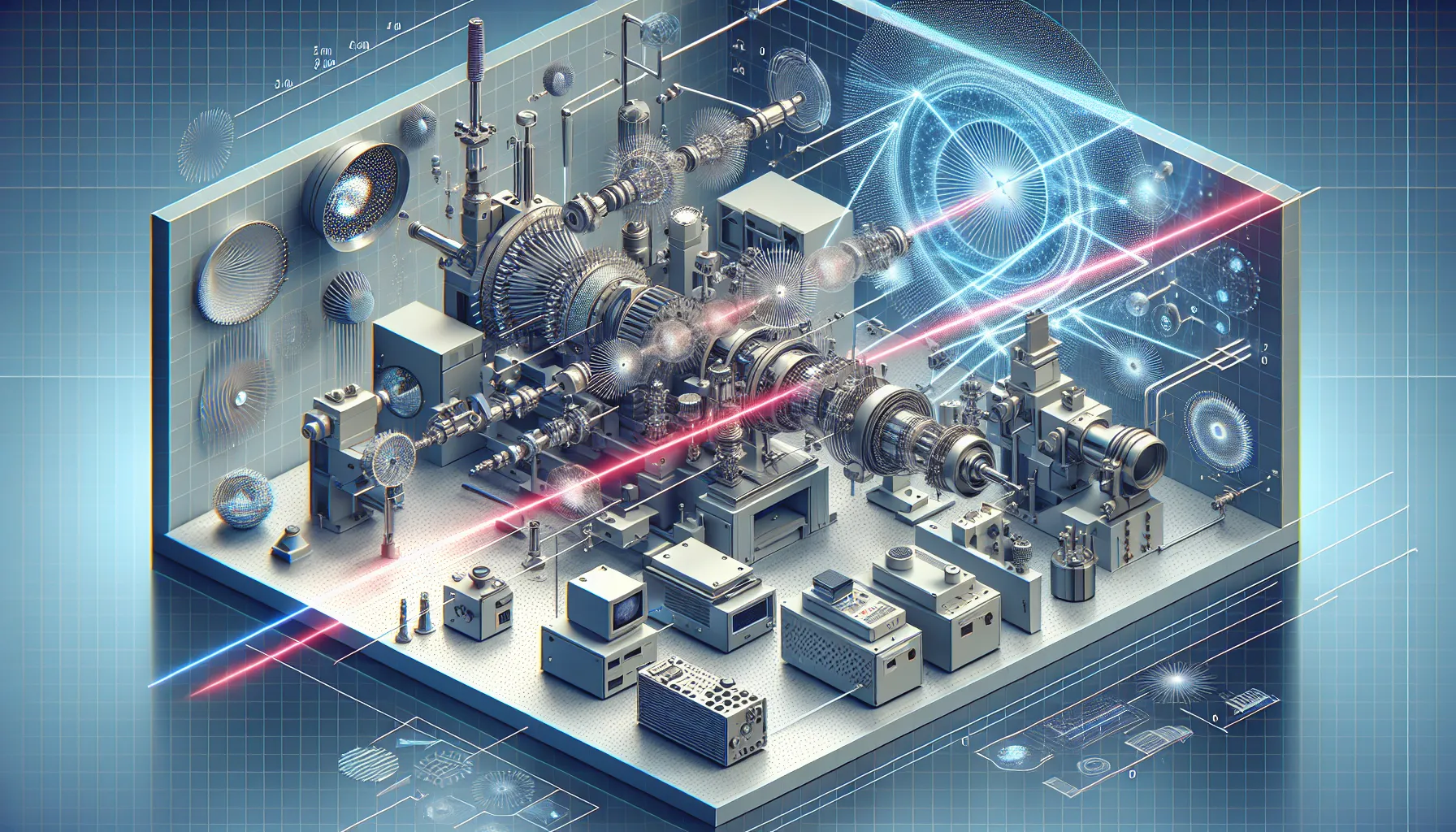
Optical pulse compressors adjust the shape and timing of laser pulses to create shorter bursts of light. This process empowers us to maximize intensity for demanding applications. Curiosity about how these devices shape laser pulses is common—how do these systems actually achieve such precise control?
Basic Principles of Pulse Compression
Pulse compression relies on managing dispersion. Fast components of a laser pulse travel differently than slower ones when passing through certain optical elements. In a compressed pulse, we use negative dispersion, often created by gratings or prisms, to reverse the pulse’s natural spread. This pulls leading and trailing edges back into alignment, resulting in a much shorter pulse with unchanged energy. Scientific and industrial users benefit from this capability by gaining the high peak power needed for ultrafast phenomena. Are you interested in how this precise stretching and recompression could affect your specific application?
Key Components of Optical Pulse Compressors
Pulse compressors contain several key parts to accomplish their job:
- Diffraction Gratings: These separate light into its component wavelengths and introduce negative dispersion, key for pulse shortening. For example, two gratings set at specific distances manipulate timing within the pulse.
- Prisms: Prisms can be arranged to offer similar control, especially when managing bandwidth up to 800MHz or handling wavelengths from 192nm to 2000nm.
- Mirrors: Precision mirrors reflect laser beams through the compressor, maintaining beam quality and alignment.
- Drive Electronics: High-speed components, like drivers developed for pulse selection, modulate timing with accurate electronic signals.
- Fiber Optics: In some systems, specialty fibers support pulse manipulation without significant loss or distortion.
We often encounter questions about how adjusting these components impacts pulse quality and application results. Have you considered how the specific configuration of your setup could optimize performance for your research or manufacturing goals?
Types of Optical Pulse Compressors
Different optical pulse compressors use varying techniques to manage pulse duration and energy. Selecting the right type depends on your system requirements and application goals. Are you exploring new ways to refine laser results or solve pulse distortion issues?
Grating-Based Compressors
Grating-based compressors rely on pairs of diffraction gratings set at precise angles. Light spreads into its component wavelengths as it reflects off each grating, and negative dispersion compresses the pulse. This approach provides high energy handling and works with a broad range of wavelengths, from ultraviolet at 192nm to near-infrared at 2000nm. Many research teams choose this style for applications in ultrafast science and micromachining where precise control over pulse width is critical. Has your project experienced challenges with managing large amounts of laser energy?
Prism-Based Compressors
Prism-based compressors use matched prisms to manipulate the differing travel times of pulse components. By passing the laser through aligned prisms, these systems balance or reverse dispersion so light realigns more tightly. Prism compressors help avoid scattering losses and maintain excellent beam quality, making them popular for setups that need fine adjustments and lower insertion loss. Users working in optical tweezers or amplitude stabilization often prefer this design. Are you looking for greater control over dispersion in your laser system?
Chirped Mirror Compressors
Chirped mirror compressors employ stacks of carefully engineered mirrors. Each mirror layer reflects different wavelengths at distinct depths, compensating for positive dispersion and compressing ultrashort pulses. This all-reflective design eliminates material absorption and supports very short pulse durations, sometimes below 10 femtoseconds. Systems requiring minimal footprint and low optical loss frequently include chirped mirrors. Could this compact, low-loss solution streamline your research setup?
Applications of Optical Pulse Compressors
Optical pulse compressors help sharpen laser pulses for demanding applications where speed and precision matter. Shorter, high-intensity pulses produced by these devices enable advanced work across scientific and industrial fields. Curious about where these tools make the greatest impact? Here are some leading uses:
- Ultrafast Laser Microscopy
Researchers use compressed pulses in multi-photon microscopy to achieve clearer images at greater depths in biological samples. This technique reveals fine cellular structures and enables fast imaging without overheating tissue.
- Telecommunications and Data Transmission
Pulse compressors support high-speed optical networks by maintaining signal clarity over long distances. Compact, low-loss compressor designs deliver ultrashort data bursts, minimizing distortion in fiber optic cables.
- Precision Micromachining and Materials Processing
Manufacturers count on compressed laser pulses to cut, drill, or pattern materials with micron-level accuracy. Shorter bursts reduce thermal effects, leading to cleaner features in electronics, medical devices, and microfluidic chips.
- Optical Tweezers and Particle Manipulation
Scientists use these pulses to trap or move microscopic objects, such as cells or nanoparticles, with high control. Stable, intense light allows delicate handling in biochemical experiments.
- High-Speed Spectroscopy and Sensing
Ultrashort pulses boost time-resolved spectroscopy by capturing fast processes in real time. For example, analyzing rapid chemical changes or monitoring dynamic phenomena becomes possible with compressed laser bursts.
- Disc Mastering and Video Content Recording
Video-disc mastering systems depend on stable, high-intensity pulses for precise exposure and pattern encoding. Pulse compressors combined with noise-reduction technologies create reliable, high-fidelity recordings.
- Quantum Electronics and Fundamental Research
Experiments in quantum communication and ultrafast physics harness compressed pulses for photon control and state manipulation. These applications often require modulation bandwidths up to 800MHz and broad wavelength coverage from 192nm to 2000nm.
Does your field rely on high-speed measurements, detailed imaging, or precise laser processing? Exploring the capabilities of optical pulse compressors could open new possibilities. What breakthroughs could you achieve with sharper, more powerful laser pulses?
Advantages and Limitations
Optical pulse compressors help us boost laser pulse intensity without losing energy, which benefits high-precision applications like microscopy, telecommunications, and microfabrication. These devices shorten pulse durations, allowing us to achieve finer resolution in imaging and faster processing speeds in data transmission. Pulse compressors support wide optical bandwidths, which means our systems can cover many different wavelengths—crucial for flexible research and industry needs.
We benefit from high energy handling in grating-based designs and minimal signal loss in chirped mirror compressors. Prism-based units offer strong beam quality, which matters for sensitive uses such as biomedical imaging. Fast response and large modulation bandwidth, sometimes up to 800 MHz, let us precisely control pulses under demanding conditions. Many of us value this level of control when we’re pushing for advancements or improved results.
Every technology comes with certain trade-offs. Pulse compressor systems sometimes increase system complexity and can need careful alignment and calibration. Grating-based compressors, for instance, may introduce alignment challenges and take up more space. Prism-based systems often offer less tunability over broader wavelength ranges. Chirped mirror types handle shorter pulses but can have limited bandwidth.
We must consider dispersion management—one compressor may handle certain laser wavelengths well but perform poorly at others. Larger setups can be less portable. Maintenance requirements may vary depending on optical element stability. Have you found these factors important in your laboratory or production process? What challenges have you encountered while integrating pulse compressors into your systems?
Here’s a quick summary of typical advantages and limitations:
| Feature | Advantages | Limitations |
|---|---|---|
| Pulse Duration | Shorter, more intense pulses | Alignment may become sensitive |
| Energy Conservation | No loss of pulse energy | Possible increase in system complexity |
| Bandwidth Support | Wide optical bandwidths enable flexibility | Prism designs sometimes limit tunability |
| Beam Quality | Prism and mirror types preserve quality | Large footprints with some grating compressors |
| Modulation Speed | Fast modulation, supporting demanding and high-speed needs | Bandwidth and performance vary by design |
| Maintenance | Stable under optimal conditions | Increased need for regular calibration |
What do you consider most important when choosing a pulse compressor for your application? We’re eager to hear how you balance performance, reliability, and convenience in your work.
Conclusion
As we continue to push the boundaries of laser technology optical pulse compressors remain a critical tool for achieving next-level performance. Their ability to tailor pulse duration and intensity opens new possibilities across research and industry.
Staying informed about the latest advancements in pulse compression helps us unlock greater efficiency and precision in our work. By exploring the right compressor solutions for our needs we’re better equipped to drive innovation and meet the demands of rapidly evolving applications.
Frequently Asked Questions
What is an optical pulse compressor?
An optical pulse compressor is a device that shortens the duration of laser pulses without reducing their energy. It uses optical components—like diffraction gratings or prisms—to realign different parts of a pulse in time, producing a shorter, more intense burst of light.
Why is pulse compression important in laser applications?
Pulse compression enhances the intensity and precision of laser pulses, making them better suited for high-precision tasks in research, telecommunications, manufacturing, and imaging. Shorter pulses with the same energy enable clearer imaging, faster data, and more accurate material processing.
How do optical pulse compressors work?
Optical pulse compressors reshape and reduce laser pulse duration by introducing negative dispersion using gratings or prisms. This reverses the natural spread of the pulse, aligning its components in time to create a much shorter pulse without sacrificing energy.
What are the main components of an optical pulse compressor?
Key components include diffraction gratings, prisms, precision mirrors, specialty fiber optics, and drive electronics. Each part contributes to controlling the timing, shape, and quality of the laser pulse during compression.
What types of optical pulse compressors are available?
There are mainly three types: grating-based, prism-based, and chirped mirror compressors. Grating-based are ideal for high energy across many wavelengths; prism-based offer excellent beam quality; chirped mirrors are compact and support very short pulses with low loss.
Which industries use optical pulse compressors?
Optical pulse compressors are used in industries like telecommunications, biomedical imaging, quantum electronics, advanced manufacturing, and scientific research. They are crucial wherever high-intensity, ultrashort laser pulses are required for precise work.
What are the key advantages of using an optical pulse compressor?
Advantages include achieving shorter pulses with higher intensity, maintaining the original pulse energy, supporting wide bandwidths, and handling high energies. These factors are crucial for advanced scientific and industrial applications needing fast, precise laser operation.
Are there any limitations to optical pulse compressors?
Yes, limitations include increased system complexity, challenging alignment, and variable performance across different wavelengths. Selecting the right compressor and ensuring proper setup are essential to optimize performance and avoid operational issues.
How do I choose the best pulse compressor for my application?
Consider the pulse energy, required duration, wavelength range, and system complexity. Evaluate if a grating, prism, or chirped mirror design matches your needs. Consulting with an expert can help ensure the best fit for your research or production goals.
Can optical pulse compressors improve results in my field?
Absolutely. By generating shorter, more powerful laser pulses, these devices can enhance accuracy, efficiency, and performance in microscopy, telecommunications, micromachining, quantum experiments, and many other fields—potentially leading to significant breakthroughs.