Domestic: (800) 748-3349 – International: (203) 743-3349
Laser power controller technology is central to modern laser systems, whether we’re stabilizing amplitude for precision microscopy, selecting pulses in a mode-locked chain, or driving modulation for disc mastering. We know selecting the right controller can feel technical and a bit overwhelming. What control methods match your laser type? Which specifications actually matter for your application? In this guide we break down control types, signals, performance specs, integration best practices, and real-world troubleshooting steps. Our aim is to make the decisions practical and approachable so you can move from requirements to a working setup with confidence. What parts of your system are giving you the most trouble right now, stability, modulation depth, or integration? Let’s walk through the choices together.
Gain Precise Control Over Laser Power, Stability, and High-Speed Modulation
From pulse selection and amplitude stabilization to high-speed modulation and precision microscopy, the right laser power controller can dramatically improve system reliability and optical performance. If you’re working to reduce RIN, improve extinction ratios, stabilize output power, or integrate wideband modulation across wavelengths from 192 nm to 2000 nm, you can shop now for Conoptics electro-optic modulators, drivers, isolators, and laser power control solutions engineered for demanding photonics applications. Whether you’re building a new control architecture or troubleshooting stability and integration challenges in an existing setup, contact us to connect with an expert who can help you optimize bandwidth, noise performance, modulation fidelity, and long-term system stability.
Key Takeaways
- A laser power controller is essential for managing and stabilizing a laser’s optical output to ensure precision and protect the laser system.
- Choosing the right laser power controller involves considering control methods, modulation bandwidth, noise performance, wavelength compatibility, and integration requirements.
- Analog controllers offer low latency and minimal noise for high-speed modulation, while digital controllers provide flexibility and advanced features for multi-mode operations.
- Proper integration includes verifying optical compatibility, grounding, detector placement, and thermal management to achieve reliable laser power control.
- Applications like pulse selection, microscopy, and semiconductor processing demand specific controller features such as high extinction ratio and deterministic timing.
- Regular maintenance, troubleshooting, and safety precautions are critical to maintain performance and extend the lifecycle of laser power controllers.
What Is A Laser Power Controller And Why It Matters
A laser power controller (LPC) is the electronic system that manages the optical output power of a laser. It can act on the laser’s drive current, an external modulator, or an intra-cavity element to regulate intensity, stabilize output, or impose fast modulation. We depend on LPCs to keep power within safe and repeatable limits, to suppress noise, and to deliver precisely timed pulses or analog modulation waveforms.
Why does that matter? Because laser performance is only as good as its control. Small power fluctuations produce measurement errors in labs, visible artifacts in disc mastering or imaging, and yield loss in semiconductor processing. In research and industrial settings, controllers are the bridge between the electrical commands we send and the optical behavior we need. They translate control signals into stable optical power, maintain linearity across modulation ranges, and protect the laser from thermal or electrical stress.
Controllers also expand a laser’s capabilities. With the right design we can carry out amplitude and phase modulation, high-extinction switching for pulse selection, or high-bandwidth modulation for communications and imaging. Across wavelengths, from the deep UV near 192 nm through 2000 nm, and up to hundreds of megahertz in modulation bandwidth, a properly specified LPC lets us exploit the laser’s full potential while protecting lifetime and repeatability.
Key Components And Controller Types
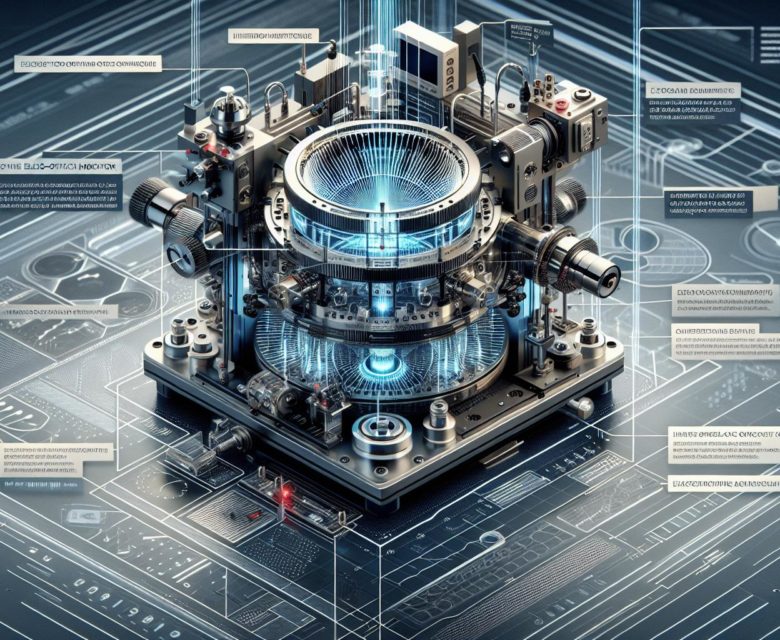
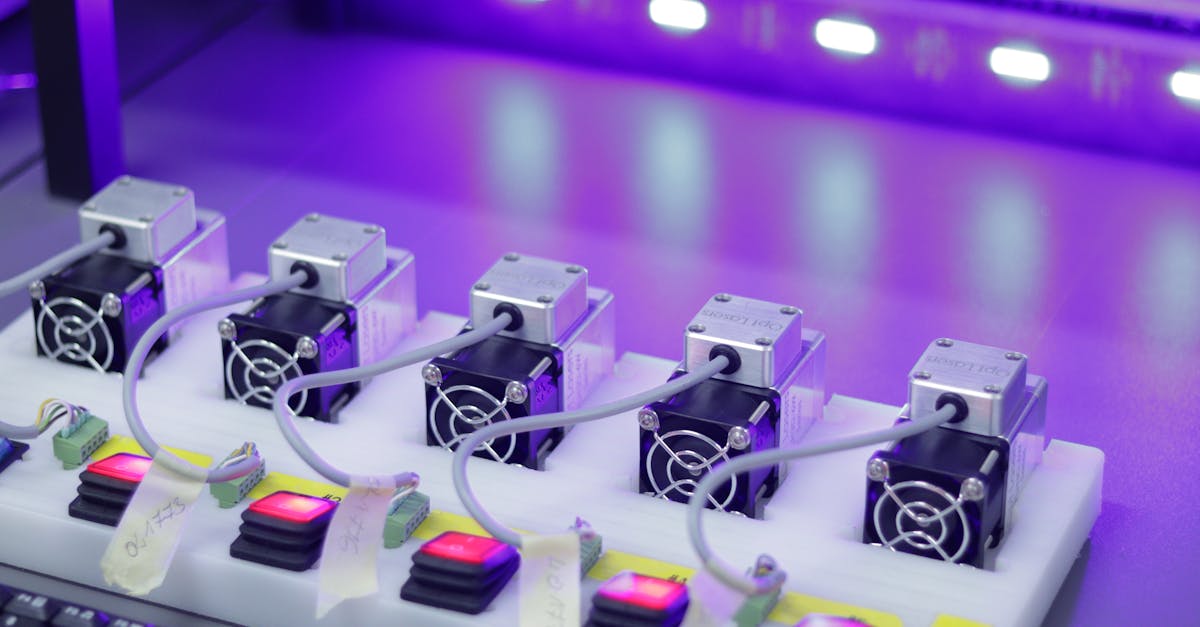
A laser power controller is typically composed of several core elements: a drive or drive-current stage, a control loop (analog or digital), feedback sensors (photodiodes or pick-off monitors), modulation interfaces, and protection circuitry. Physical form factors vary from compact OEM modules to rack-mount units with integrated diagnostics.
Controllers differ by how they carry out control and how they connect to the laser. Below we compare the most common architectures and when each is appropriate.
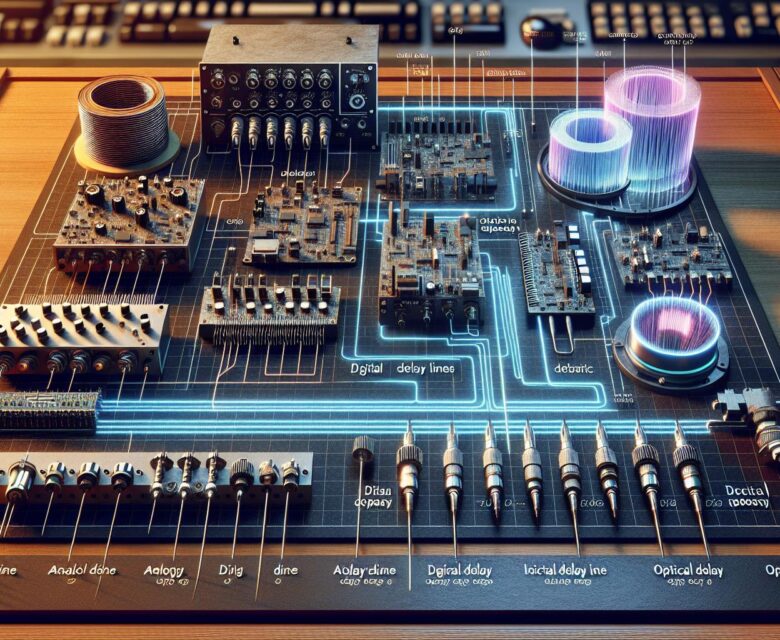
Analog Vs Digital Controllers
Analog controllers use continuous electronic circuits to shape the control response. They can offer low latency, predictable phase behavior, and simple tuning with pots or fixed components. Analog designs shine where we need very low noise and fast response with minimal computational latency, for example, in high-speed modulation for imaging or when stabilizing a sensitive analog detector.
Digital controllers sample sensor signals and apply corrections using digital signal processing (DSP) or microcontrollers. They offer flexibility: programmable control laws, adaptive filters, and networked telemetry. Digital systems make it easier to carry out multi-stage control, user-selectable bandwidth, or complex modulation patterns. But, they can introduce quantization noise and sample/hold latency, which must be considered at high bandwidths.
When to pick which? We favor analog solutions when the priority is the lowest possible noise and immediate response, especially for modulation into the hundreds of megahertz. Digital options are better when we want advanced features, remote configuration, logging, or multi-mode operation across several lasers.
How Laser Power Controllers Work (Control Methods And Signals)
Understanding how controllers operate lets us match control methods to application needs. The three common control methods are direct current modulation, external modulator drive, and intra-cavity actuation.
Direct current modulation adjusts the laser diode current. It’s simple and offers low-latency control but can affect wavelength and polarization. For small-signal modulation, current modulation is convenient. For larger swings or very high extinction, it may stress the diode or change other laser characteristics.
External modulators, electro-optic or acousto-optic devices, provide high-speed, high-extinction control while isolating the laser’s internal operating point. Electro-optic modulators support extremely fast modulation with broad optical bandwidth, suitable for pulse picking and high-speed communication. Acousto-optic modulators are useful where moderate bandwidth and large extinction are needed, often in pulse shaping and beam deflection.
Intra-cavity actuators and mechanical shutters are used for specialty applications where extreme extinction or mode control is required. These approaches tend to be slower but can offer high attenuation.
Control signals coming into the LPC include analog voltage or current control inputs, high-speed digital serial streams, TTL or CMOS gating signals, and RF/amplitude waveforms. Feedback signals typically come from photodiodes or integrated monitor detectors and may be AC-coupled for noise measurement or DC-coupled for absolute power control.
Loop design choices, PID controllers, lead/lag compensation, notch filters, and feedforward paths, determine how the system responds to disturbances. For example, we often use feedforward when a predictable modulation waveform is applied: the controller injects a pre-compensated drive to reduce residual error without forcing an aggressive feedback bandwidth that could destabilize the system.
Specifications To Compare When Choosing A Controller
When selecting a laser power controller, some specifications are non-negotiable: others depend on the application. Here are the key parameters we compare.
Bandwidth and modulation speed: This determines the maximum frequency content the controller can pass. For pulse selection, regen switches, or high-speed modulators used in imaging and communications, we look for modulation bandwidths out to several hundred megahertz. For amplitude stabilization, lower bandwidths (kHz range) can be adequate.
Modulation depth and extinction ratio: Extinction ratio indicates how well the controller and modulator can turn the beam off. Semiconductor processing and pulse picking often require high extinction ratios (60 dB or better). For amplitude modulation, linearity across the intended range is also critical.
Wavelength range and optical bandwidth: Controllers that drive external modulators must match the modulator’s optical bandwidth. We work with systems spanning deep UV (near 192–257 nm) through visible and near-IR out to 2000 nm. Ensure the controller and modulating optics are specified for your wavelength.
Noise performance: Measured as relative intensity noise (RIN) or power spectral density, noise specifications tell us how much amplitude fluctuation remains after control. Lower RIN improves signal-to-noise in spectroscopy and imaging.
Drive interface and signal types: Does the controller accept analog input, digital pattern inputs, or RF input? Are TTL triggers supported? Ensure interfaces match your signal generators and synchronization scheme.
Thermal and electrical protection: Overcurrent, overtemperature, and interlock provisions protect both laser and controller. For industrial use, look for hardened designs, diagnostics, and warnings.
Form factor and integration options: Modules for OEM integration differ from lab bench units. Consider physical size, mounting, and connector types.
Latency and deterministic timing: For synchronized experiments or real-time control, latency and jitter matter. Some digital controllers add variable latency that can complicate timing: analog signal paths often provide more deterministic timing.
Finally, consider serviceability and customization options. Many applications benefit from custom drive electronics or tailored modulation systems, especially when pushing into deep UV or very high modulation bandwidths.
Integration And Installation Best Practices
Good integration reduces headaches later. We follow a set of practical steps when installing a controller and associated modulators.
- Verify optical compatibility. Confirm the controller and modulator are rated for your wavelength and power. Deep-UV optics, for example, require coatings and materials different from near-IR.
- Establish proper signal grounding and shielding. High-speed modulation can induce ground loops and EMI. Use star grounding where possible, route RF cables separately from low-level sensor lines, and use coaxial or shielded differential pairs for high-speed signals.
- Place feedback detectors thoughtfully. A monitor photodiode should sample a stable fraction of the beam, avoid locations that see mode or pointing fluctuations. For high-stability loops, temperature-stabilized detector housings help.
- Start with conservative loop settings. When commissioning a closed-loop controller, use low bandwidth and modest gain. Increase bandwidth in steps while observing loop stability with an oscilloscope or spectrum analyzer.
- Characterize the system response. Measure the open-loop transfer function to identify resonances, phase lags, and gain margins. Use these measurements to set compensators and notch filters.
- Manage thermal loads. High-speed drivers and modulators can dissipate significant heat. Ensure adequate air flow, heat sinking, or chilled enclosures as required.
- Synchronize triggers and clock references. For pulse-selection or timing-critical modulation, distribute a single master clock and low-jitter triggers to avoid timing skew.
- Test with real signals. Run representative modulation waveforms and record output with the intended detectors. This confirms the system performs under operational conditions, not just with small-signal stimuli.
Finally, document settings and create a basic maintenance schedule. Periodic recalibration of monitor detectors and verification of loop performance helps maintain long-term reliability.
Common Applications And Industry Examples
Laser power controllers appear across research labs and production lines. Here are common use cases and how controllers are adapted.
Pulse selection and mode-locked systems: In ultrafast laser chains we use pulse pickers and regen switches that demand high extinction and low dispersion. Controllers drive electro-optic modulators at high speed to pick single pulses from pulse trains for experiments or materials processing.
Optical tweezers and microscopy: Stable intensity control is essential for trapping forces and repeatable imaging. Low-noise amplitude stabilization improves signal-to-noise for multi-photon microscopy, and low-dispersion modulators preserve pulse shape.
Disc mastering and optical recording: High-speed modulation and noise suppression are critical for precise exposure control in mastering. Systems historically used noise-eater modules to remove laser noise and multi-function modulators to handle tracking and exposure.
Semiconductor processing and lithography: These applications need tight power control, high extinction, and deterministic timing. Controllers for this market often combine high-speed drivers with rigorous protection and long-term stability specs.
Communications and sensing: High-bandwidth modulators driven by wideband controllers serve fiber-optic links and advanced sensing. Controllers with RF inputs and clean analog outputs are common.
Research and defense applications: From beam steering to isolation, controllers tie into modulators, isolators, and fiber systems to satisfy demanding performance across wavelengths from deep UV to near-IR.
In each case, controllers are matched to optical components, modulation bandwidth, and environmental conditions. Many systems benefit from modular electronics that can be customized for bandwidth, extinction ratio, or wavelength coverage up to 2000 nm and modulation bandwidths near 800 MHz.
Troubleshooting, Safety, And Lifecycle Considerations
When problems occur, a structured approach saves time. We prioritize safety and systematic diagnosis.
Safety first: Treat laser systems with respect. Ensure interlocks are enabled, wear appropriate eye protection for the wavelengths in use, and follow facility safety procedures. Electrical safety matters too, de-energize systems before accessing high-voltage modulators or driver boards.
Common issues and fixes:
- Unstable output or oscillation: Reduce feedback gain, lower bandwidth, and inspect grounding. Measure open-loop transfer to identify phase lag or resonant peaks.
- Excess noise after closing the loop: Check sensor placement and stray reflections. Replace or re-bias the monitor photodiode if it’s saturating or nonlinear.
- Poor extinction or incomplete switching: Verify modulator alignment, driver voltage levels, and termination. High-speed switches need precise impedance matching.
- Thermal drift: Improve heat sinking and add temperature regulation for both modulators and detectors.
- Timing jitter or inconsistent triggers: Use a common clock source and low-jitter trigger distribution. Replace long or lossy trigger cables with controlled-impedance lines.
Lifecycle considerations: Controllers and modulators have maintenance needs. Photodiodes age, coatings degrade under UV exposure, and electrolytic capacitors in drivers can drift. Plan for periodic recalibration and component replacement schedules for high-duty systems.
Spare parts and redundancy: For critical production tools, keep spare controllers and modulators on hand. Modular designs simplify swap-out and minimize downtime.
Finally, document failure modes and resolutions. A troubleshooting log helps us spot recurring issues and refine integration practices for future systems.
Conclusion
Selecting and integrating a laser power controller is a multi-factor decision: bandwidth, extinction, noise, wavelength compatibility, and integration practice all matter. By clarifying application needs, measuring system response, and following careful installation steps, we can build reliable, high-performance laser systems, from pulse selection and high-speed modulation to long-term amplitude stabilization. If you’re tuning a new control loop or upgrading modulation bandwidth, start with conservative settings, characterize the system, and iterate. Doing so reduces surprises and delivers the optical performance your experiments or production processes require.
Laser Power Controller FAQs
What is a laser power controller and why is it important?
A laser power controller (LPC) manages the optical output power of a laser by regulating intensity and stabilizing output. It ensures precise power control, reduces noise, and protects the laser, which is critical for accuracy in applications like microscopy, disc mastering, and semiconductor processing.
How do analog and digital laser power controllers differ?
Analog controllers use continuous circuits for low-latency, low-noise response ideal for high-speed modulation, while digital controllers offer flexible, programmable control with advanced features like remote configuration and multi-mode operation but may introduce latency and quantization noise.
Which control methods are used in laser power controllers?
Common control methods include direct current modulation for simple, low-latency control; external modulators like electro-optic and acousto-optic devices for high-speed, high-extinction control; and intra-cavity actuators for specialty applications requiring extreme extinction or mode control.
What key specifications should I consider when choosing a laser power controller?
Important specs include modulation bandwidth, extinction ratio, wavelength compatibility, noise performance (RIN), drive interface types, thermal protection, and form factor. These parameters ensure the controller matches your laser’s application needs and operating environment.
How can I ensure proper integration and installation of a laser power controller?
Verify optical and electrical compatibility, use proper grounding and shielding, position feedback detectors carefully, start with conservative loop settings, manage thermal loads, synchronize triggers, and test with real signals. Documentation and periodic recalibration also help maintain reliability.
What are some typical applications of laser power controllers?
LPCs are used in pulse selection for mode-locked lasers, optical tweezers, laser amplitude stabilization, disc mastering, semiconductor processing, optical isolators, and high-speed communications, covering wavelengths from deep UV (192 nm) to near-IR (2000 nm) and modulation bandwidths up to 800 MHz.